


AI FOR EVERYONE · 18 SEPTEMBER 2026 · 3 MIN READ
Google’s AI helper
takes on family admin
School emails, sports times and party invitations rarely arrive in one place. Google wants its new family assistant to gather the pieces.
Also inside: an ad that answers back, and a new way to check a number before you share it.
01 · AT HOME
The family calendar gets an AI helper
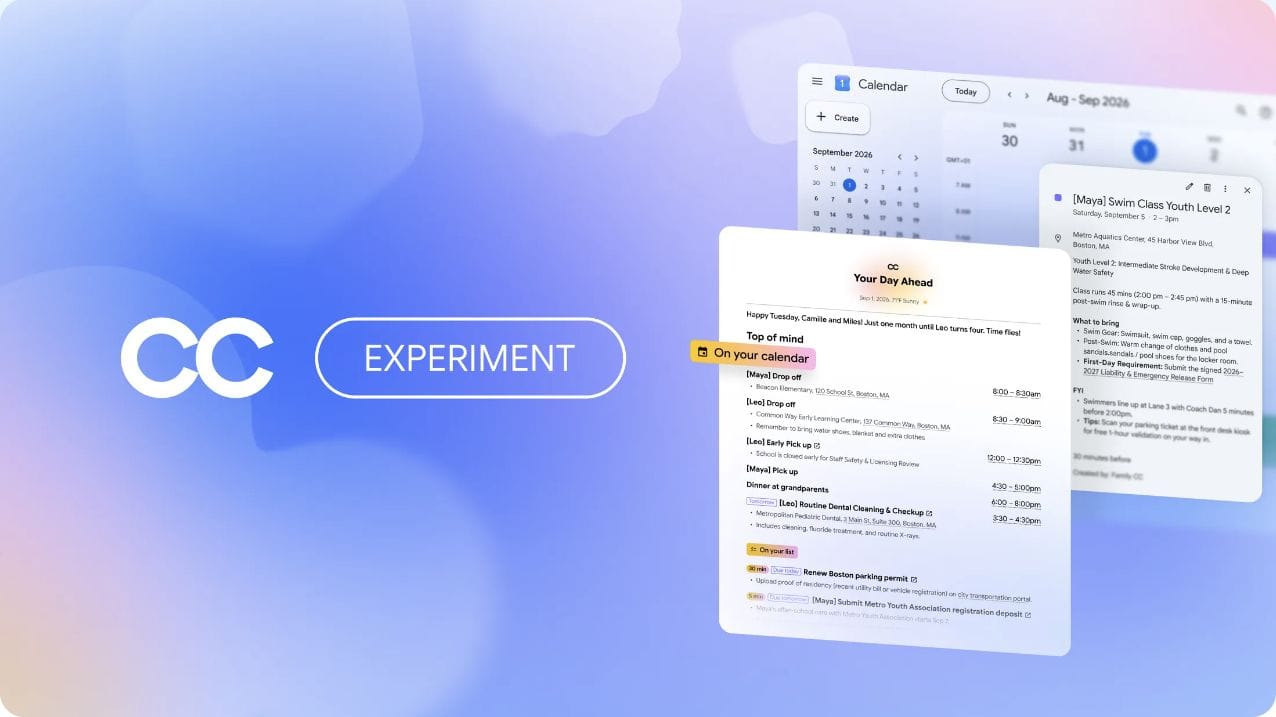
CC’s daily summary and calendar. Official product image: Google. Image source
Google expanded CC, its experimental AI assistant, to families and households on September 17.
Up to six people can share selected emails, invitations and files with it. CC uses that information to prepare a daily summary, update a shared calendar and track tasks.
Send it a photo of a party invitation, for example, and it can add the event to the calendar. It can also help fill in activity forms and make meal plans.
The useful change: the plan no longer has to live in one person’s inbox. Each member chooses what to share. Google says CC asks permission before acting outside the group.
Who can use it? Adults in the US with a personal Google account. It is an early experiment; new users join a waitlist.
02 · WHEN YOU SHOP
A ChatGPT ad you can talk to
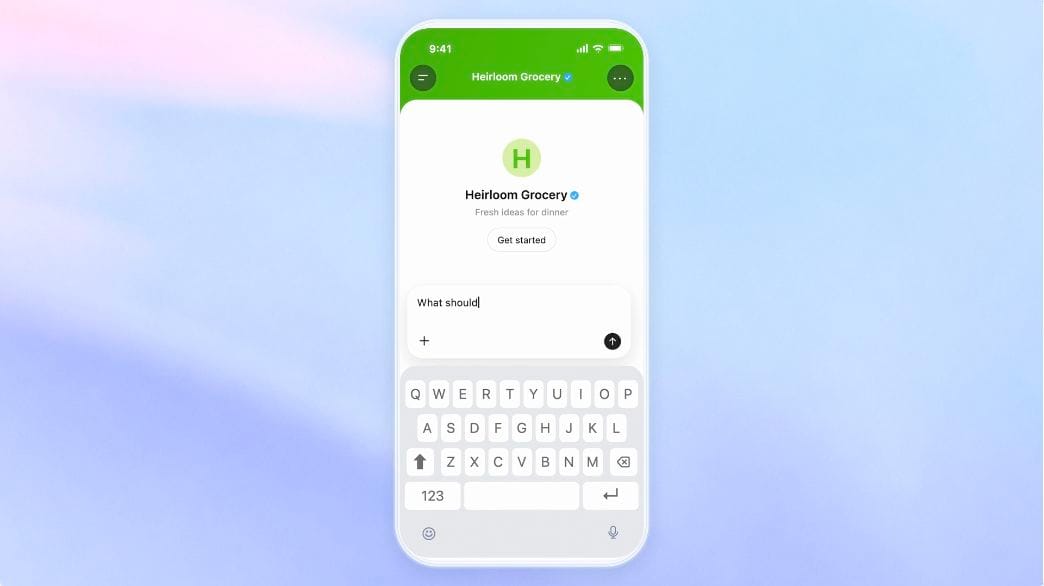
A separate chat with a grocery brand. Frame from OpenAI’s product demo. Image source
An online ad usually sends you to a shop. OpenAI is testing another option: start a chat with the advertiser.
Announced on September 16, Sponsored Agents let you ask follow-up questions after clicking an ad in ChatGPT. In OpenAI’s demo, a grocery ad offers a “Chat with us” button.
The key detail is who is speaking. This is a clearly labelled conversation sponsored by a business, separate from your original ChatGPT chat.
Think of it like talking to a shop assistant: helpful for questions about that shop’s products, and still part of a sales pitch. Compare the offer with other shops before deciding.
Where is it available? It is being tested with selected advertisers in the US.
03 · FINDING THE FACTS
A simpler front door to UN statistics
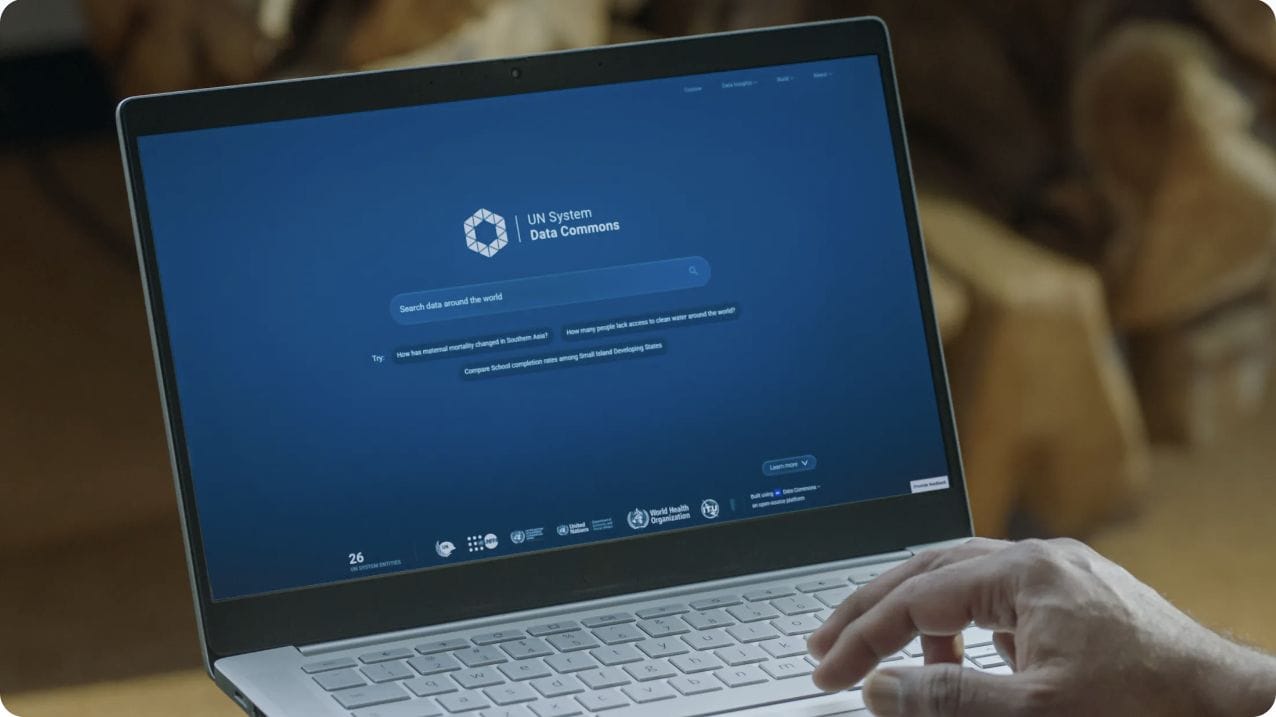
The new UN data site. Image published by Google. Image source
The UN’s new System Data Commons, announced on September 17, brings statistics from across the UN into one searchable site, built using Google’s Data Commons platform.
You can ask questions in ordinary language or browse topics such as education, health and clean water. For a school project or a number you have seen in the news, it offers a place to look for the underlying data.
We tried it: a question about electricity access in Kenya recognised the country but returned no matching topic. The search still has gaps. Its Explore page lets you browse by place and subject instead.
That is a useful reminder: when a search finds nothing, it does not mean the information does not exist.
LEARN ONE THING · 60 SECONDS
A link is not a fact-check
When AI gives you a statistic, a source link is a starting point. You still need to see what it supports.
Ask this:
Show me the original source for this number, the year it covers and exactly what it measures.
Then open the link. Check three things: the number, the year and the group being counted.
A figure about adults in one country cannot describe everyone in the world. And a newly published article can still use old data.
What would you hand over first?
Hit reply with the one family-admin task you would most like AI to handle.
See you next time,
Artificialintelligence.ai
AI for everyone. Sources and image credits appear with each story. Checked 18 September 2026.