


01 · ON YOUR TO-DO LIST
OpenAI tests AI on everyday chores
LifeVal announcement graphic. Image: OpenAI. Image source
On November 2, OpenAI showed LifeVal, a new test of how well AI handles normal life tasks, like finding childcare, making a budget, ordering groceries and dealing with government forms.
OpenAI asked almost 4,000 people what they would most like help with. The test is built around their answers.
Why it matters: OpenAI wants ChatGPT to finish tasks for you, not just give advice.
Keep in mind: OpenAI made the test itself and only shows results for its own AI. Its newest model scores about 81 out of 100.
Can you use it? No. It is a test, not a new feature. But it shows where ChatGPT is heading.
02 · ON YOUR WEBSITE
A simple way for websites to say no to AI training
From OpenAI’s announcement. Image: OpenAI. Image source
Websites have a small settings file called robots.txt that tells automated visitors what they may do. On October 30, OpenAI, Google and Microsoft agreed to respect one shared line in that file. It means: do not use my content to train AI.
Until now, website owners had to block each AI company separately. Soon, one line can cover them all.
Anthropic, the company behind Claude, helped write the proposal and says it is adding support too.
Why it matters: if you run a blog, shop or news site, it becomes easier to decide whether your work is used to build AI.
Can you use it today? Not fully yet. OpenAI says it will start in the coming months, and Google in 2027. Keep any rules you already have.
03 · IN ORBIT
Google tested AI in space, and the answer came over Svalbard
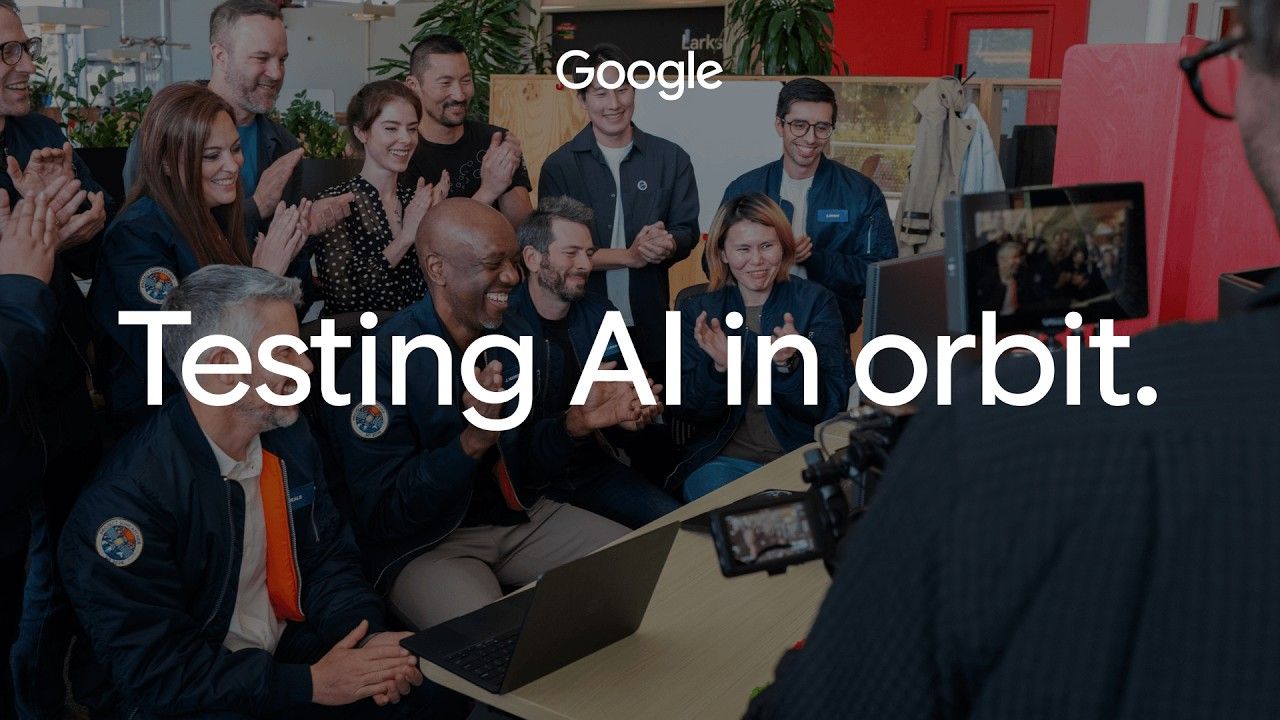
Project Suncatcher video still. Image: Google. Image source
Google sent a test satellite into space on October 1 as part of Project Suncatcher. It carries the same kind of AI chips Google uses in its data centres.
On October 30, Google said it had sent a question up to the satellite and got an answer back: a short poem about space. The reply arrived as the satellite passed over Svalbard, Norway.
The important limit: this was a first small test. Google still needs to check how the chips handle heat and radiation. The next step, two connected satellites, is planned for 2027.
Why it matters: AI uses a lot of electricity. Google wants to find out if solar power in space could one day help run it.
LEARN ONE THING · 60 SECONDS
Ask AI to do the job, not just explain it
Tell the AI what result you want and which limits it must follow. Then ask what it could not check.
Try this before your next task:
Please do this for me: [task]. My limits are [budget, place, deadline]. Show me the result, and tell me anything you could not check.
Example: instead of tips on choosing a kindergarten, ask for a shortlist with deadlines. Instead of budgeting advice, ask for a filled-in budget.
You get something useful, and you still make the final decision.
Which errand would you hand to AI first?
Hit reply: paperwork, shopping, scheduling, or something else?
See you next time,
Artificialintelligence.ai
AI for everyone. Original sources and image credits accompany every story. Checked 3 November 2026.