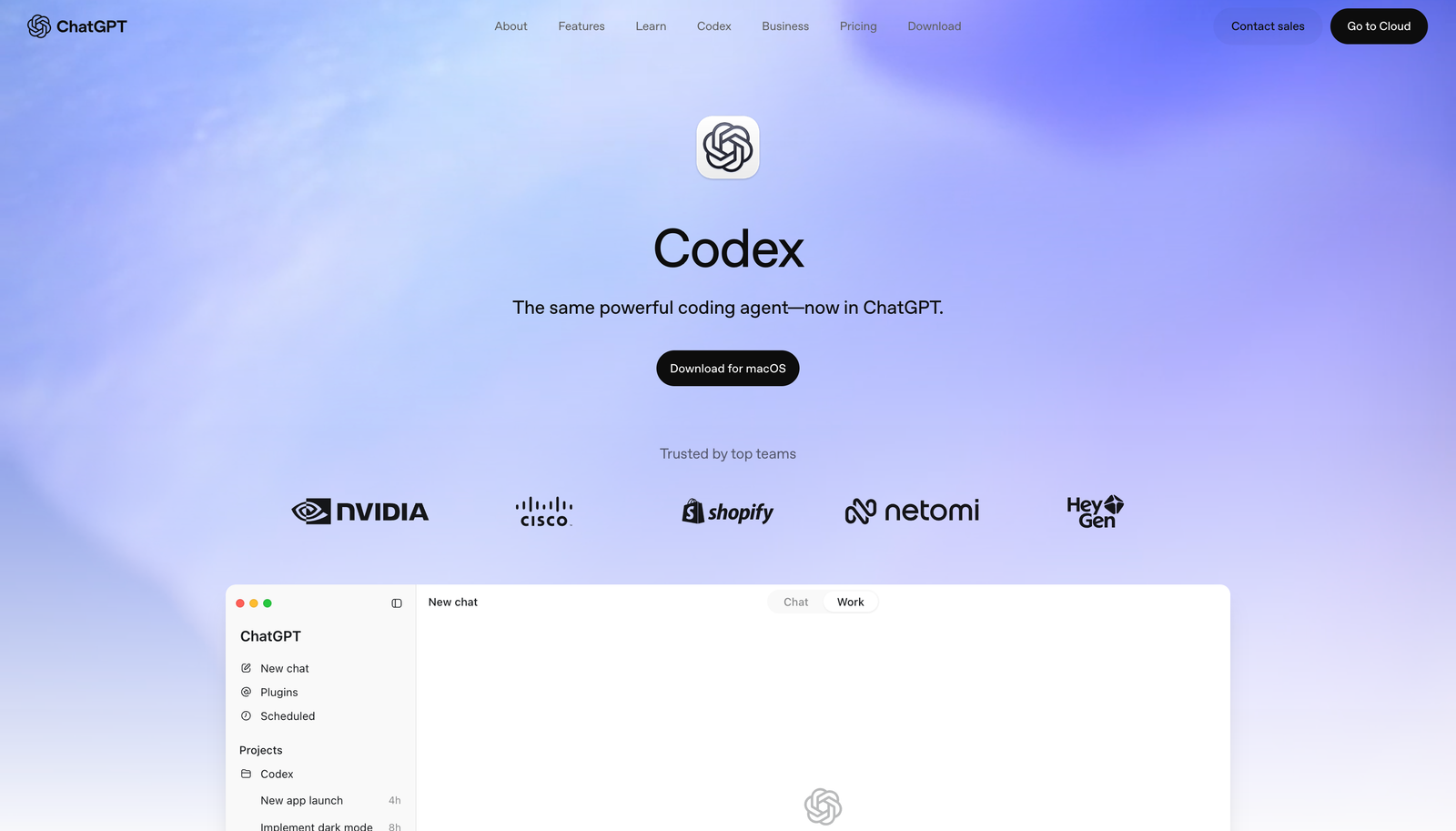

Codex is OpenAI’s coding agent for work that needs more than a quick answer. Give it a well-scoped task and it can explore a codebase, change files, run commands and tests, and show you what it did. The useful mental model is simple: you remain responsible for the goal and the final review; Codex helps move the work forward.
OpenAI describes Codex as an agent for writing, reviewing, and shipping code, available across local and cloud-based workflows. That makes it valuable for both small fixes and larger, repeatable engineering tasks—but it is not a replacement for understanding the change you are about to merge.
What Codex is good for
Use Codex when you can describe a concrete outcome and a way to tell whether it worked. Good examples include:
- Explaining an unfamiliar part of a repository before you touch it.
- Fixing a reproducible bug with a failing test or clear acceptance criteria.
- Adding a focused feature, migration, or integration with a bounded scope.
- Reviewing a pull request for edge cases, missing tests, or risky assumptions.
- Automating a repetitive code or documentation task after you have checked the first result carefully.
For broader non-coding work—such as assembling a document from several sources—OpenAI positions Codex as an agent that can work across files and repeatable workflows, while ChatGPT remains useful for thinking through the work in conversation. Choose the surface that matches the task rather than trying to use one tool for every job.
Start with a small, testable brief
The fastest route to a good result is to tell Codex what should change, where it should look, and how you will judge success. Avoid a vague request such as “make this app better.” A useful brief gives the agent boundaries and gives you something specific to review.
A prompt you can adapt
“In the account settings screen, fix the bug where a saved display name disappears after a page refresh. First inspect the existing data flow and explain the likely cause. Then make the smallest safe change, add or update a test that reproduces the issue, and run the relevant checks. Do not change unrelated settings behavior.”
Include these four things whenever you can:
- The outcome: what should be true when the task is finished.
- The scope: files, feature area, or things that must not change.
- The evidence: tests, commands, screenshots, or a review path that confirms the result.
- The constraints: compatibility, security, performance, style, or deployment requirements.
Use the terminal or IDE when the work is local
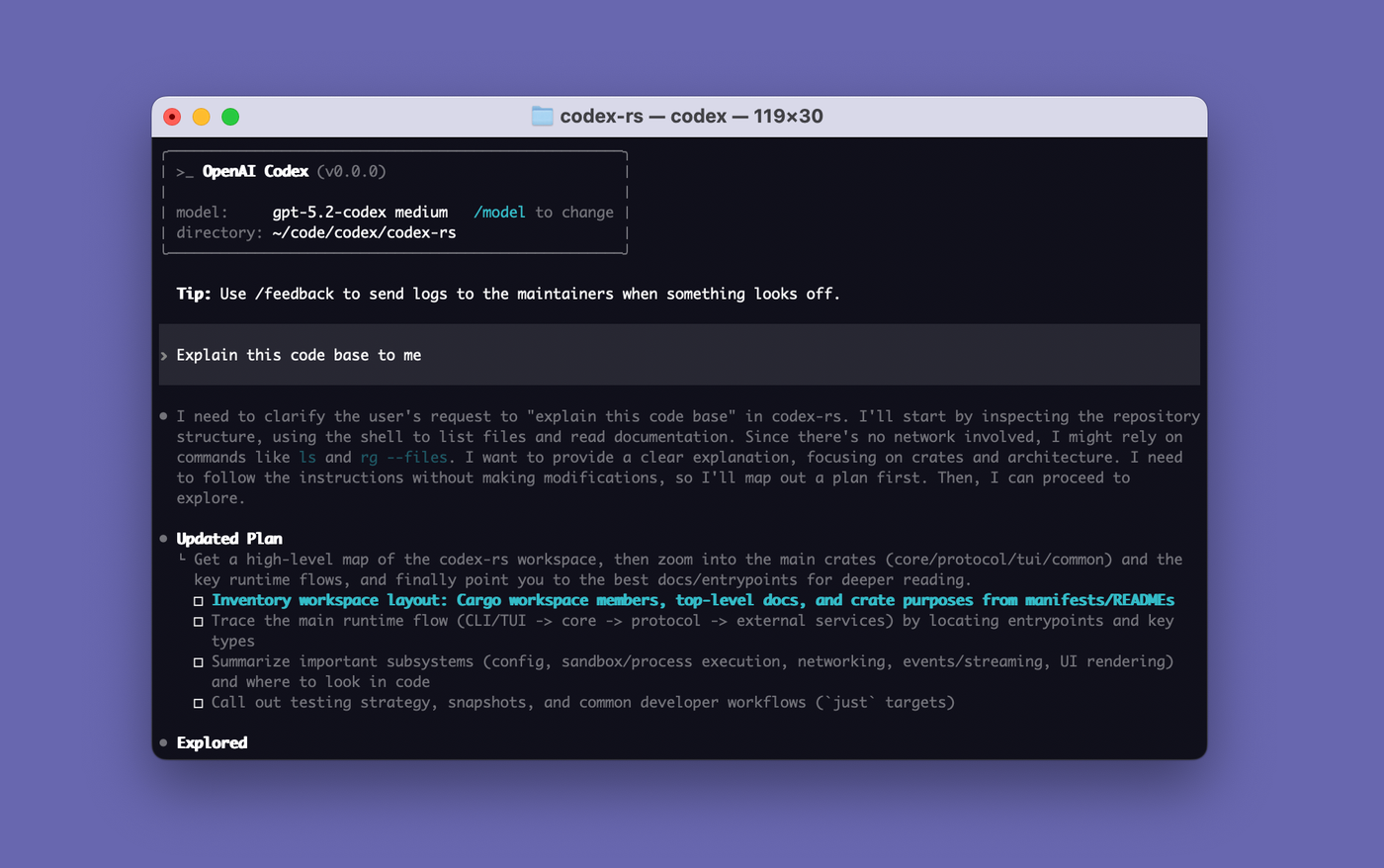
Codex can pair with you in local tools such as the terminal and supported IDEs, or you can delegate work to a cloud environment. The Codex CLI is an open-source command-line agent that can read, modify, and run code in your local environment. For many people, the most approachable first step is asking it to explain a repository or make one small change while you watch the plan and results.
Review is part of the task, not an afterthought
Treat Codex’s output like a capable teammate’s pull request. Read the summary, inspect the changed files, and run the relevant checks yourself when the change matters. Ask follow-up questions when you do not understand a decision. If a task touches authentication, payments, production data, secrets, or user permissions, give it an extra review from someone who owns that area.
A simple review checklist
- Does the change solve the stated problem without broad, unrelated edits?
- Were tests or other checks run, and do they cover the important behavior?
- Are errors, unusual inputs, and backwards compatibility considered?
- Could this expose a secret, private data, or a new permission path?
- Can another teammate understand the change from the code and summary?
Ways to build confidence without falling behind
Start with work you can verify in under an hour: explain a module, write a focused test, update a small component, or review a change you already understand. OpenAI’s getting-started material walks through creating a project and giving Codex work, while the open-source repository is useful for people who want to follow the CLI’s development directly. The habit to build is not “delegate everything.” It is learning to give a clear brief, inspect the evidence, and keep your own judgment in the loop.