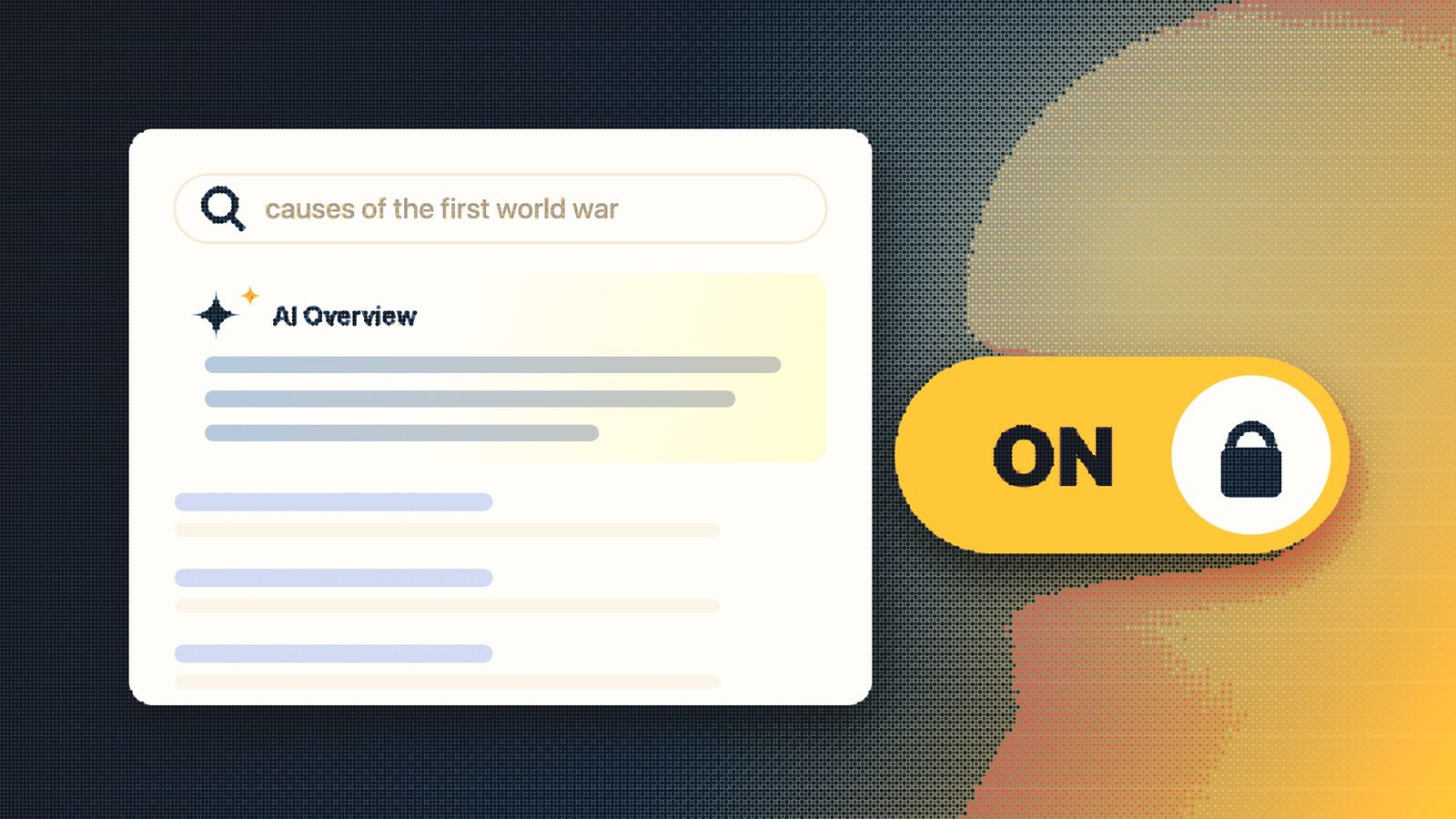

Google is handing schools more control over AI. From early 2027, its AI tools will be switched off by default for K-12 student accounts, and administrators will decide what to turn on. But the feature many teachers care about most is not on the list: the AI-written summaries at the top of Google Search.
What Google announced
On November 3, Google's head of education, Chris Phillips, said Gemini, Gemini Notebook, Gemini in Classroom and Google Search will stay off for K-12 student accounts until a school administrator turns them on.
The catch came with Search. Google does not offer a version of it without AI Overviews, the summaries above the links, or AI Mode, its chatbot-style search. As first described, a school that wanted to keep AI away from students risked losing Google Search on school accounts altogether.
A quick partial U-turn
The reaction was fast. Teachers, librarians, school IT staff and elected officials across the political spectrum criticised the plan, and a former Google director started a petition.
Within a day, Google clarified that Search and Gemini will have separate controls. Schools can keep Search without switching on the Gemini products.
What still hasn't changed
The core complaint remains. Turning on Search still means turning on AI Overviews and AI Mode. There is no setting in Google's admin console that keeps the traditional list of links and hides the AI summary.
Instead, Google is testing Guided Learning in AI Overviews, a version meant to walk students through a question rather than simply hand them the answer. Schools may be able to choose it if the pilot works out. For many educators, that is not the same as an off switch.
Some districts are looking elsewhere. Web filter companies such as Lightspeed Systems say their tools can hide AI Overviews and block AI Mode while keeping normal results. The other options are changing the default search engine on every student device, or blocking Google Search.
Why teachers care
Picture a 14-year-old asked to research the causes of the First World War. Traditionally, the lesson is in the searching: opening sources, comparing them and judging which to trust. With an AI summary at the top of the page, many students will stop there.
Accuracy is another worry. A study cited by Wired found that only around four in ten AI Overviews could be fully checked against the sources they cited. Google says the summaries are rigorously tested and keep improving.
Why Google holds firm
Google's position is that Search and AI are now so closely integrated that one cannot simply be separated from the other. There is also a business angle. AI Overviews are central to where Google is taking Search, and an official off switch for schools would be a precedent others could point to.
What schools can do now
The new controls arrive in early 2027. Before then, schools using Google Workspace for Education should decide which Gemini tools, if any, students should have, and check whether their web filter can manage AI Overviews.
Just as important is the conversation with teachers about how research lessons should work when the first thing students see is an AI answer.


