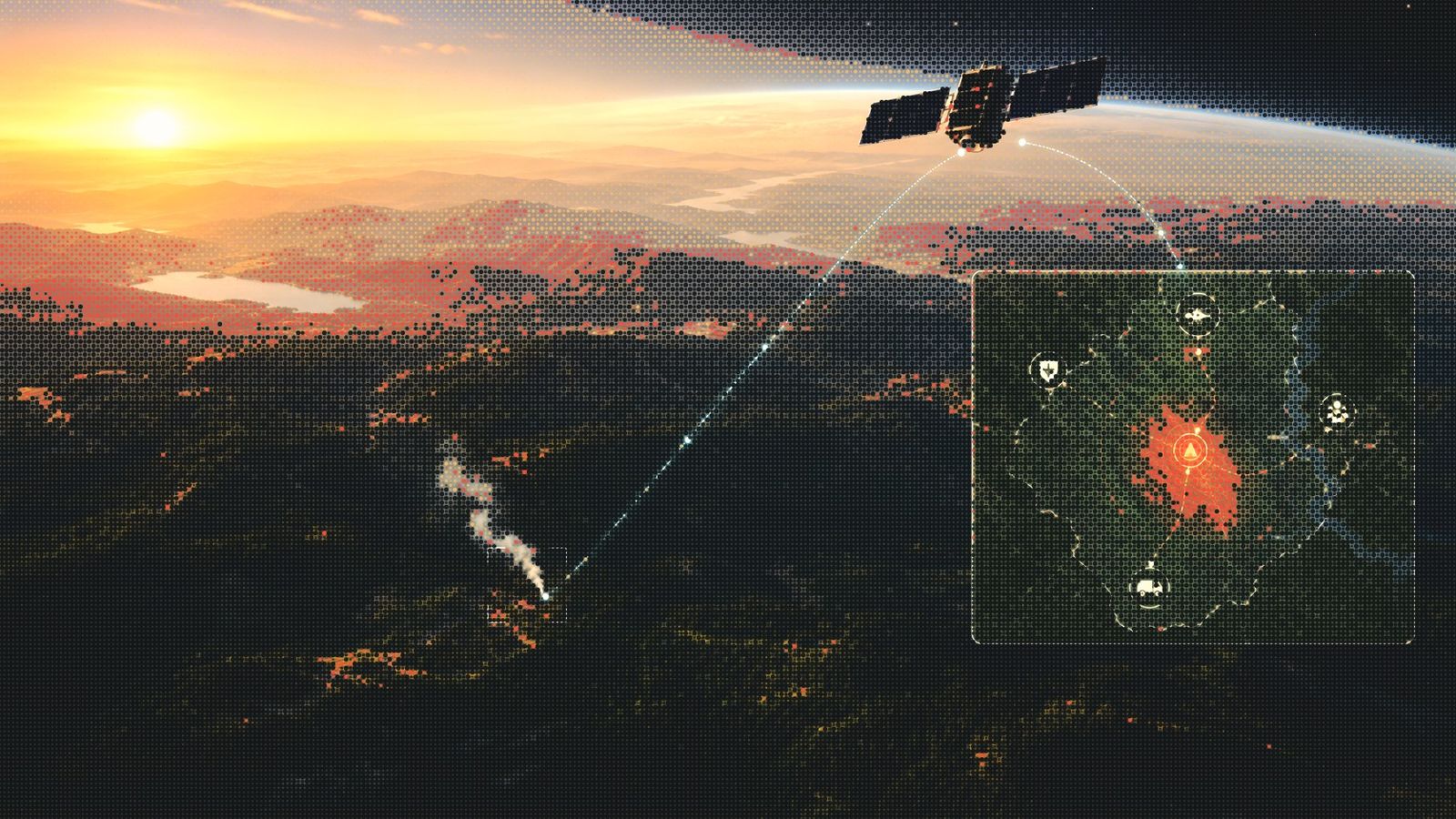

AI headlines often focus on chatbots, image generators, or workplace automation. But some of the most important uses may be much quieter: helping people notice a problem earlier, when there is still time to act. A new satellite launch aimed at wildfire detection is a good example.
On July 7, Google Research said three additional FireSat satellites had launched to expand a program designed to help fire agencies detect wildfires sooner. The project combines purpose-built satellite sensors, AI, and a partnership with the nonprofit Earth Fire Alliance and fire-response organizations.
Why finding a fire early matters
A small fire can change fast. Wind, dry vegetation, terrain, and access all affect whether a spark stays manageable or becomes an emergency. The hard part is not only responding once a fire is known. It is getting dependable information quickly enough for people on the ground to make a good call.
According to Google, FireSat’s pilot satellite demonstrated the ability to spot early-stage fires as small as five by five meters, including low-intensity blazes that existing satellites can miss. The three new satellites are meant to build toward more continuous coverage. That does not make a satellite a replacement for firefighters, local knowledge, or emergency planning. It gives those people another early-warning signal.
What the “AI” part actually does
A satellite produces an enormous amount of visual and sensor data. The useful AI task is not to make a dramatic prediction out of thin air. It is to help distinguish a potentially meaningful heat or smoke signal from ordinary background conditions, then surface it fast enough for experts to investigate.
That is a helpful way to understand AI beyond the hype. In many real systems, AI is a pattern-spotting layer inside a larger workflow. It needs good sensors, a clear objective, careful testing, and people who can decide what to do next. Better software alone cannot put out a fire; better information can help the right response happen sooner.
A practical lesson for everyone following AI
It is easy to think AI progress only counts when a tool writes, talks, or creates something visible. FireSat points to another kind of progress: AI that makes complex systems easier to monitor and act on. You may see the same pattern in health screening, fraud detection, accessibility, energy management, and maintenance work.
When you hear about an AI project, three simple questions are worth asking:
- What real-world signal or information is the system using?
- Who checks the result and decides what happens next?
- What does success look like in the real world — earlier warning, fewer errors, more access, or something else?
Why this is worth watching
Wildfire detection is a difficult, high-stakes problem, so it is exactly the kind of place where claims should be tested carefully. The FireSat program is still growing, and the value will depend on its coverage, reliability, and how well alerts fit into existing emergency workflows. Still, it is a concrete reminder that the best AI stories are often not about replacing people. They are about giving people more time, more context, and a better chance to act.
If you are trying not to fall behind, you do not need to chase every model release. Keep an eye on examples like this one. They show how AI is moving from a novelty on a screen into the background systems that help communities understand what is happening around them.


